Post #6 Reflection

Inquiry Question:  How can we better introduce disciplinary literacy in younger grades?

Image result for inquiry image

I believe that I have found a variety of ways to introduce disciplinary literacy in younger grade levels.   While I found that there is not an infinite amount of information related to disciplinary literacy in the elementary classroom, I still was able to find information that I think will benefit teachers. I hope that the information I found will help teachers to not see disciplinary literacy as something that is scary or too difficult to do.  I wanted to help teachers be able to realize that there are some simple things they can add to their lessons to enhance the disciplinary literacy experience.

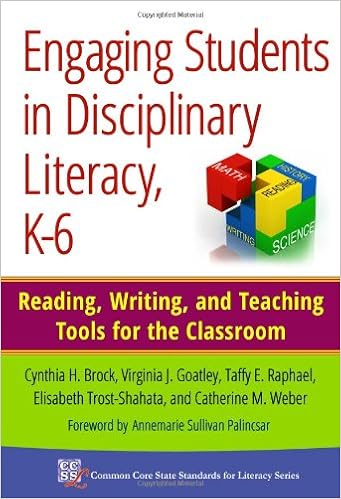
When I was reading my professional text titled “Engaging Students in Disciplinary Literacy, K-6”, they shared some of the struggles with disciplinary literacy in the elementary classroom.  I think it is important to share these struggles because I think it could help motivate teachers to do more related to this and to help further research in this area.   Some of the struggles they shared were the following:

  • The limited research base on disciplinary literacy in elementary grades
  • Disciplinary literacy in the elementary grades is minimally defined
  • Elementary children have little experience with informational text
  • Norms of the disciplines – how experts think, act, talk, and write within their disciplines – have not been foregrounded in the elementary classroom

So as I reflect upon my findings related to my inquiry I also think of the struggles that would need to be overcome to properly implement this in the classroom.  I think some of the ideas I shared will help teachers to implement disciplinary literacy in their classrooms.

Resource:

Brock, C. H., Goatley, V. J., Raphael, T., Trost-Shahata, E., Weber, C. M., & Palincsar, A. S. (2014). Engaging students in disciplinary literacy, K-6:  Reading, writing, and teaching tools for the classroom. New York: Teachers College Press, Columbia University.

Post #5 Components of Instruction to Foster Disciplinary Reading

As I have been reviewing the text, “Engaging Students in Disciplinary Literacy, K-6”, I have found what they describe as “components of a coherent instructional framework for fostering disciplinary reading.”  I felt these components were important to my inquiry journey because they demonstrate what effective disciplinary literacy instruction should look like in the classroom.  I am focusing on elementary grade levels so this information is proving to be important in my inquiry.  The components they shared; I will describe below.

  1. The Reading Context

This component refers to the fact that as readers we read the different text differently.  It may vary because of our experiences or because of the type of text that it is.  For example, historians do not read the text as truth, instead, they try to interrupt what they read.  They are looking for facts versus bias and questing what they read.  Understanding how to read different text to gain more meaningful experience with the text is something that has to be explicitly taught.

  1. Knowledge of the Comprehension Process

Having an understanding of the comprehension process will help any teacher, regardless of discipline, provide better disciplinary literacy instruction.  These text advocates for a transactional model of reading.  This means that the reader and text each bring something to the table.  The teacher brings background knowledge which can impact their understanding of the text.

  1. Know Your Students

It is important to know your students as people, for who they are outside of the academic setting. This will help connect students to books that they will get the most meaningful experiences from.

  1. Knowledge of Text and Text Features

This text states that it is important to consider three features which include, gene, text structures, and graphics/graphic features.  These are likely to be encountered in multiple different ways for students.  Therefore, teaching them to understand the difference and how to interact with them will benefit them in every discipline.

  1. Knowledge of Instructional Practices and Assessment

Instructional practices that this text focuses on include, considering text complexity and rigor, close reading, pre-teaching (frontloading), use text-dependent questions, teach annotation.  This text shares that this helps ensure quality instructional practices in all disciplines.

I think that these components would be beneficial no matter what discipline you are teaching.  I think these could help bring disciplinary literacy into many subjects because it will better help teachers to prepare these types of lessons.  This is a great addition to my inquiry process because it is helping me to find more ways to create meaningful experiences in the elementary classroom.

Image result for Disciplinary literacy picture

(Quinnell, J. 2014)

Resource:

Brock, C. H., Goatley, V. J., Raphael, T., Trost-Shahata, E., Weber, C. M., & Palincsar, A. S. (2014). Engaging students in disciplinary literacy, K-6: Reading, writing, and teaching tools for the classroom. New York: Teachers College Press, Columbia University.

Quinnell, J. (2014, June 25). Disciplinary Literacy. Retrieved from https://funnytimes.com/54035/

Post #4 – Design Principals of Disciplinary Instruction

I chose the text, “Engaging Students in Disciplinary Literacy, K-6” to review for my inquiry project.  I Choose this book because it related to elementary grade levels which is my area of focus. My next couple of blog post will relate to my experiences with this text.

This text listed five design principals to improve disciplinary literacy instruction.   I found these principals important because they were not something I had come across before.  They looked at this type of instruction with different lenses, which I think will benefit students and educators.   Below I will list a brief summary of each of the principals noted in the text.

  1. Authentic social and cultural practices are critical features of instructional units.

I think these two practices are often overlooked in lessons.  I especially think that social practices are often overlooked.  The book mentions using authentic writing practices such as writing to pen pals.  In this current time period, this would have evolved into writing blogs, twitter, social media, podcast, etc.  It is important to keep up with the times to keep things relatable and meaningful to students.

  1. An optimal learning model provides a framework for instructional units.

The text mentions that these models could include explicit-instruction, modeling, coaching, and independent practice.  I would consider this making sure you are differentiating your lessons as well as providing multiple modes of delivering information and receiving learned information from students.

  1. Key inquiry questions give structure o disciplinary study

Providing key inquiry questions ensures that students are focused on what they are to learn from the unit.

  1. Composing meaning within and across units requires a range of resources (including both conventional texts and digital media).

Create text sets that are meaningful, diverse in information and in ability level. This helps students access information in a variety of meaningful ways.

  1. Authentic assessments must reflect the different types of meaning-making processes students use as they read, write, and talk in the course of instruction.

These assessments could include reading, writing, and talk assessments.  Talk assessments mean that you assess information a student has learned through conversation rather than producing a physical artifact.

These principals will help to ensure you are creating effective multi-disciplinary instruction in the elementary classroom.  I found this help on my inquiry journey because it related to what you would do in the elementary classroom.  It also provided guidelines to ensure you are meeting the needs that the disciplines would require.  You could almost use these principals as part of an outline for your lessons to ensure you are meeting them.

Image result for disciplinary literacy in the elementary classroom

Resource:

Brock, C. H., Goatley, V. J., Raphael, T., Trost-Shahata, E., Weber, C. M., & Palincsar, A. S. (2014). Engaging students in disciplinary literacy, K-6: Reading, writing, and teaching tools for the classroom. New York: Teachers College Press, Columbia University.

Post #3 Bringing Science & Writing Together

Inquiry Question:  How can we better introduce disciplinary literacy in younger grades?

I’ve been spending a lot of time reviewing resources related to my inquiry question.  I am still having a hard time finding tons of resources related to disciplinary literacy in the elementary classroom.  I have found a resource I really enjoyed related to writing in science.  As a special education teacher, I mostly taught reading and math.  We never did science experience. I was pretty excited when I found this method for helping students write science reports.  I felt this could easily be taught in the elementary classroom.  It would allow for students to respond to their experiences in writing.  It would also allow for them to have a method for responding without causing confusion.  This process also helps them learn to use scientific vocabulary.

Ms. Haland, the researcher, who completed a study with students on writing in the science classroom introduced a technique called “IRMaD”.  This method is commonly used in research.  This stands for, Introduction, Method, Result, and Discussion.  When students review what they experienced they would outline the events and results using this method.  It allows students to clearly share what they experienced and explain it scientifically.  The words “method” and “result” are commonly used in science vocabulary.  This would help students gain a better meaning of those terms and use them effectively.  In the “Introduction” section, she has students pose a question they hope to answer by completing the experience.  She also had them add a section for writing down the equipment used.  This section would also help students to build their science vocabulary as they process science equipment and their uses.

Overall, this method would be great in the elementary classroom.  It allows for thoughtful reflection and use of scientific vocabulary.  I believe this would help students to respond to their experiments in a meaningful way, which brings science and literacy together!

Image result for IMRaD experiment

(Thomas, K. 2015)

References:

Håland, Anne. (2016). Disciplinary Literacy in Elementary School: How a Struggling Student Positions Herself as a Writer. The Reading Teacher. 70. 10.1002/trtr.1541.

Thomas, K. (2015, December 07). What Does IMRaD Reveal About Science? Retrieved from https://medium.com/literacy-discourse/what-does-imrad-reveal-about-science-7de7741ba987

Post #2 – Dr. Don Deshler

Inquiry Question:  How can we better introduce disciplinary literacy in younger grades?

I have been spending time review resources related to my inquiry question.  I have found it to be true that disciplinary literacy is focused on more in the upper-grade levels because I have found limited resources related to elementary school! I find it odd that this is the case since science, social studies, math, music, etc are all taught in younger grade levels too.  However, I suppose in younger grades you typically focus on reading strategies.  I do believe some children would be ready for more though.

I watched a webinar on disciplinary literacy by Dr. Deshler.  He focused on important strategies to implement when trying to use disciplinary literacy.  Below is a review of the strategies he mentioned during the webinar:

  • identify essential vocabulary that students will come in contact with during their reading
  • teaching students to read like a “historian”, “scientist”, “mathematician”
    • students learn that there are different ways to read depending on the context of the text.

I think these skills would be important to teach in the elementary classroom.  Vocabulary varies from the subject so teaching students content-specific vocabulary would be very beneficial to them.  It would help them have a better comprehension of the text if they are prepared for some of the vocabularies they may come across in their reading.  Students also need to learn the difference between different context text.  That when you read science text you may ask different questions from when you’d read a social studies text.   If students have an understanding of this it would help them make better sense of what they are reading.

Image result for read like a historian

(Mackey, A. 2018)

I included this chart because I thought it may be helpful for teachers when trying to have students read like a historian.  Dr. Deshler shared the importance of teaching students to read using a specific lense, such as reading like a historian.  These questions will make students really think deeply about what they have read.

Resources:

Deshler, D. (n.d.). Disciplinary Literacy Strategies. Retrieved from http://ceedar.education.ufl.edu/portfolio/dr-don-deshler-disciplinary-literacy-strategies/

Mackey, A. (2018, January 22). Reading Like a Historian. Retrieved from https://studycivilwar.wordpress.com/2018/01/22/reading-like-a-historian/

Disciplinary Literacy Blog Post #1

As a special education teacher, I spent the majority of my time teaching specific reading strategies.  My students often could not read the text, therefore, had a difficult time with comprehension.  However, when I did have comprehension groups, I was able to pull out some text for students to read and discuss. I was excited to discuss disciplinary literacy in this class because I often felt it was something missing from the elementary classroom and special education.  I would define disciplinary literacy as being able to read and understand content in a variety of situations.  Reading a science-based material would be very different from reading a piece of literature or even social studies.  Teaching students to learn how to read these texts in different contexts would allow them to access more material.  The Shanahan article stated that until middle school students are not always exposed to disciplinary literacy.  They also stated that students must be specifically taught to understand disciplinary literacy, otherwise, the skills do not develop on their own (Shanahan & Shanahan, 2014).  I included a chart at the bottom of this post that I felt described how disciplinary literacy fits in literacy in general.   It shows disciplinary literacy at the top of the pyramid, that requires you to understand other foundational literacy skills first.  It also demonstrates that by understanding disciplinary literacy, you have a higher understanding of literacy in general.

As stated in the Shanahan article related to elementary disciplinary literacy, the argument that while there is no cognitive reason for delaying disciplinary literacy teachings, there is also no reason to engage in it early either (Shanahan & Shanahan, 2014).  I must say I do disagree with this argument.  I believe students are capable of learning these strategies earlier than often given credit.  I also believe that learning these strategies makes reading more exciting and fun.  I can recall many times as a child, pretending to be a scientist, trying to use “fancy” words, sometimes inappropriately, to make myself feel like the real deal.  If we teach students to use these words appropriately, we are open up a door for them that can lead to so many wonderful experiences.   Teaching children to understand that different disciplines require a different way of reading and thinking could certainly help them become better readers overall.

As a part of my inquiry, I would like to focus on how to introduce disciplinary literacy in earlier grade levels.  My hope is that I will find the answers to how to bring these skills into younger grades so that when they do reach middle and high school, this becomes more of second nature to them.  This relates to my current goals as an educator because I worked with all grade levels.  Some of my students struggled more with comprehension while others struggle with phonics.  However, as a special education teacher, I felt that they could benefit from this exposure.  So if I were to be in a special education classroom again, I would like to encourage more reading from a different discipline.  I feel strongly that this would help give my students a head start when they already struggle so much with reading.  I plan to read the text entitled, ” Engaging Students in Disciplinary LIteracy, K-6:  Reading, Writing, and Teaching Tools for the Classroom” by Cynthia Brock.  I chose this book because I felt it would help me discover new ways to integrate disciplinary literacy into younger classrooms.

Disciplinary Literacy Chart

Picture created by: BCPS Literacy Field Guide for Educators


Works Cited:
BCPS Literacy Field Guide for Educators. (n.d.). The Role of the Content Area Teachers in Developing Literacy Skills in Students [Digital image]. Retrieved from http://www.bcps-literacyguide.com/html/page121.php
Shanahan, C., & Shanahan, T. (2014). Does Disciplinary Literacy Have a Place in Elementary School. The Reading Teacher,67(8), 636-639. Retrieved February 2, 2019.